

How to Restore Discolored Grout to Its Original Color
The tile is fine. The grout is the problem. Those dark lines are usually years of dirt pushed down into the pores, and professional buffing scrubs it back out to the shade you started with.
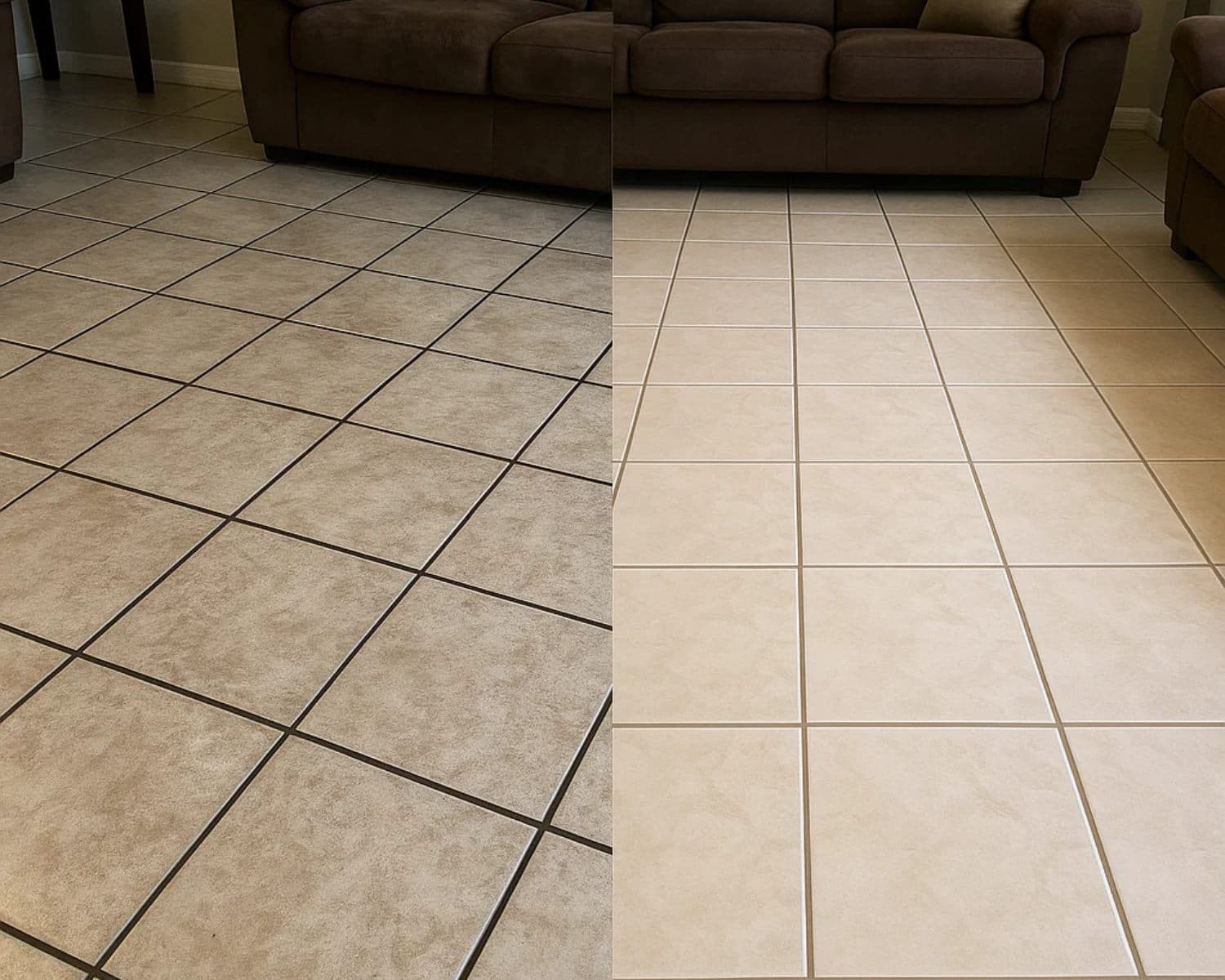
If you've stared at dark, grimy grout lines and figured that's just the color they are now, you're probably wrong about that. In most homes the grout hasn't changed color at all. It's soaked up years of dirt, grease and dirty mop water, and what you're looking at is trapped soil sitting down in the pores, not a permanent stain in the material itself. That's good news, because trapped soil can come out.
Why mopping never gets grout clean
Almost everyone reaches for a stiff brush, a spray bottle and a lot of elbow grease. You scrub, the top skims a little cleaner, and two lines over it looks exactly the same. The reason is simple: a brush only works the very surface of the grout. The dirt that's actually making the line look dark is sitting below that, down in the pores where bristles never reach.
Mopping is worse than useless here. A mop drags a film of dirty water across the floor and the grout, being lower and porous, catches the runoff every single time. So the tile wipes clean and the grout lines slowly get darker with every mopping. You're not cleaning the grout, you're feeding it.
Store-bought grout cleaners lift a bit off the top and leave a residue that grabs new dirt fast, which is why a spot you scrubbed hard looks dingy again in a few weeks. None of these methods scrub the soil out of the pores, and that's where the color you don't like is living.
That dark grout line usually isn't stained. It's full of soil the pores soaked up, and once you scrub the soil out, the original color is right there waiting.
Why this surface is different
Grout is a cement product, and cured cement is full of tiny interconnected pores. Glazed tile has a hard, sealed face that soil can't penetrate, so it wipes clean with a rag. Grout does the opposite. It drinks in whatever hits it: cooking grease that drifts down in a kitchen, body oils and soap in a bathroom, plain foot-tracked dirt in an entry. Each spill wicks down into the pore network and dries there. Do that a few thousand times over several years and the grout reads as brown or gray even though the material underneath is still its original color.
Here's the part that trips people up. The discoloration isn't flat on the surface, it has depth. The soil is packed through the full thickness of the exposed grout, so scrubbing the top face can never win. You'd have to lift the soil out of the pores it's wedged into, and no amount of surface pressure does that. It takes a degreasing solution plus a machine that scrubs it down into the grout to break that bond and work the loosened soil back out.
How Safe-Dry® restores it
Safe-Dry uses professional deep buffing, which is built for exactly this. A cleaning solution matched to the floor is applied to the grout lines, then a rotary floor buffer works it down into the joint, so the solution breaks the grease and oils holding the dirt in place and the rotating brush scrubs it loose out of the pores. Then the floor is rinsed and the loosened soil is mopped away in the same pass. The dirt leaves the floor instead of getting pushed into the next line.
Because we're scrubbing trapped soil up out of the joint rather than skimming the surface, the grout comes back to its real color, usually a shade or two lighter than the homeowner expected. On natural stone we match the pH of the solution to the tile so nothing gets etched or dulled. It's the same solution and buffer on ceramic or porcelain, tuned to how deep the soil actually went. Every visit is backed by our 100% Satisfaction Guarantee. If you're not happy, it's free.
We walk through the full deep-cleaning process on our how tile & grout cleaning works page, and every job is backed by our 100% satisfaction guarantee.
Want to try it yourself first?
Light, everyday grime is worth a shot at home. Here is the honest version of what actually helps, and the point where DIY hits its ceiling.
- 1
Start with a cleaning solution, not the mop
Work a grout cleaning solution into a test section and let it sit a minute before you touch it. The solution is what breaks the grease that's holding the dirt down. Skipping straight to a dry brush is why people feel like they're scrubbing forever and getting nowhere.
- 2
Work one small section at a time
Use a narrow grout brush or an old toothbrush and go line by line in a two-foot square. A big floor mop or a deck brush spreads the loosened dirt around instead of lifting it. Small and focused beats fast and sloppy on grout.
- 3
Wipe up the slurry before it dries
Once you've agitated a section, the dirt is now suspended in dirty water sitting on top of the grout. Blot it up with a clean rag right away. If you let it dry, it settles straight back into the pores and you've undone your own work.
- 4
Rinse with clean water and change it often
Go back over the section with a fresh rag and clean water, and swap that water out the moment it looks murky. Rinsing with dirty water just redeposits soil. This is the step most people skip, and it's why home cleaning looks better wet than it does dry.
- 5
Know when the soil is too deep
If the lines still read dark after they dry, the discoloration is packed deeper than a hand brush can reach. That's not a failure on your part, it's the pores. Deep buffing with a rotary machine scrubs soil up and out of the full thickness of the grout, which is the only thing that resets the color on years of buildup.
Frequently asked questions
Is my grout stained permanently or can the color come back?
In most homes the color comes back. What looks like a permanent stain is usually years of dirt, grease and mop water absorbed down into the pores, not a change to the grout itself. Once that trapped soil is scrubbed out, the grout returns to its original shade. The only time color is truly permanent is if the grout was dyed or damaged, and your technician can tell you which one you've got.
Why does the grout look clean when it's wet but dark again when it dries?
Because water temporarily darkens and hides the soil, then evaporates and leaves it right where it was. A quick pass with water gives you that wet, promising look, but nothing was actually removed from the pores, so the dry result is unchanged. Machine buffing is different because the rotating brush scrubs the soil loose out of the joint and it's rinsed and mopped off the floor instead of drying back into the grout.
Will cleaning lighten the grout back to how it started?
That's the goal. Since we're removing trapped soil rather than adding anything, the grout comes back to its real color, which is often a couple of shades lighter than you're used to seeing. Homeowners are frequently surprised the lines were meant to be that light. If the original grout was a dark color to begin with, it'll return to that dark color, just clean.
Can this work on old grout, or is it too far gone?
Old grout is usually a great candidate, because old grout has had the most time to absorb soil. The buildup is deeper, but deep buffing is designed to reach the full thickness. As long as the grout is structurally sound and not crumbling, age isn't the barrier. Depth of soil is, and that's exactly what the process is built to handle.
Related tile & grout problems we solve
Shower & bathroom grout
Shower grout stays wet, so soap scum, body oils, and minerals soak into the lines and turn them dark, orange, or pink.
RoomsTile floors
Mopping pushes dirty water into the grout where it dries, so tile floors go hazy and the grout lines darken year after year.
ProblemGrout haze & film
Foggy tile is a film on top: leftover grout haze or years of soap and cleaner residue. More mopping adds to it. We cut it and scrub it off so the glaze reads clear.
Ready to see your grout’s real color again?
Enter your zip code to reach your local Safe-Dry® team. We deep-clean tile and grout across 532 locations in 6 states, with same-day appointments in most areas.