

Cleaning Tile Floors
The tile is fine. It's glazed, it wipes clean, it barely holds dirt at all. The grout is the problem, and once you understand why, the whole floor makes more sense.
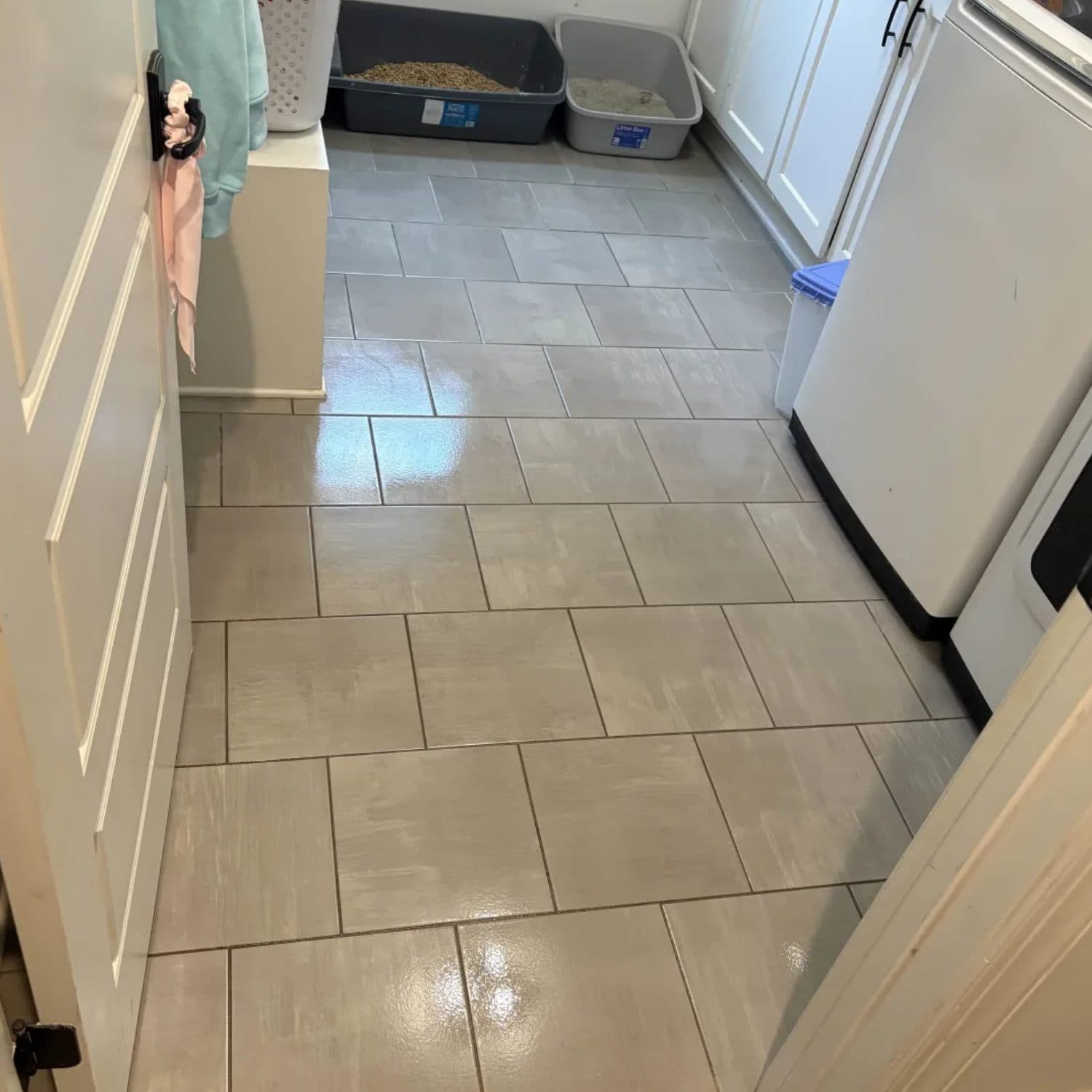
Tile floor cleaning sounds simple. The tile is hard, glazed, and easy to wipe, so how hard can it be? The catch is that a tile floor isn't really one surface, it's two. There's the tile, which wipes clean, and there's the grout between every piece, which doesn't. When people say their tile floor looks dull, hazy, or dingy, what they're almost always seeing is the grout, and the grout is the part a mop can't fix.
Why mopping leaves the floor hazier than before
Think about what a mop actually does. You fill a bucket, the water gets dirty within a few passes, and now you're spreading gray water across the floor. On the tile face it just evaporates and leaves a thin haze. In the grout lines, which sit lower than the tile, that dirty water pools before it dries, and it dries right there, leaving the soil behind in the pores. Every mopping adds another layer. That's why grout that started off light drifts darker year after year.
The mop water is only half of it. Regular floor cleaners leave a residue, and residue is sticky. It grabs the next round of dust and footprints faster than clean tile would, so the floor that looked great the day you mopped looks dull again in a week. People respond by mopping more often, which just feeds more residue and more dirty water into the grout. It's a loop, and mopping harder doesn't break it.
Steam mops feel like the answer but usually aren't. They loosen soil with heat, sure, but they don't scrub it out or rinse it away. There's no rotating brush getting down into the grout and nothing lifting the dirty water off the floor, so the loosened grime settles right back into the grout as it cools. You've heated the problem and set it back down in the same place.
A tile floor is two surfaces, not one. The tile wipes clean. The grout soaks it in. That's why mopping the whole thing only fixes half of it.
Why the grout darkens and the tile just hazes
A tile floor has two completely different surfaces sitting side by side, and they behave nothing alike. The glazed tile is basically glass fired onto clay. It's non-porous, so dirt has nowhere to go but the surface, which is why a wipe cleans it and why haze on the tile is just a thin film sitting on top. Grout is the opposite. It's cement, it's porous, and it sits in a recessed channel between the tiles, so it's both a sponge and a low spot that dirty water flows into.
That difference is the whole story of a dingy tile floor. Dirt on the tile buffs away with foot traffic and cleaning, so the tile mostly holds its own. The grout catches everything the tile shrugs off, soaks it into the pores, and holds it there, and because the grout lines make a grid across the entire floor, that darkening reads to your eye as the whole floor looking dirty. The tile is doing its job. The grout is quietly collecting years of everything a mop pushed into it, and no amount of surface cleaning pulls it back out.
How Safe-Dry® resets the whole floor
The point of professional cleaning is that we don't leave the dirty water on the floor. Your technician works a cleaning solution into the grout, then runs a professional floor buffer whose rotating brush scrubs deep into the porous lines and floats the embedded soil loose, reaching down into the recessed joint a flat mop just rides over. Then the floor is rinsed and that dirty water and the soil in it are mopped straight up off the floor. Nothing is left to dry back into the grout, which is the exact failure that mopping can't avoid. That's why the grout comes back to its actual color instead of just looking freshly wet.
We tune it to what you've got underfoot. Ceramic and porcelain take the firm-scrubbing approach without any fuss. Natural stone tile, travertine or marble or slate, gets a pH-balanced solution and no acids, so the stone stays safe while the grout still gets flushed. When we're done the tile is clear of haze and the grout lines are a color you may not have seen in years, and it's all backed by the 100% Satisfaction guarantee. If it's not right, it's free.
We walk through the full deep-cleaning process on our how tile & grout cleaning works page, and every job is backed by our 100% satisfaction guarantee.
Want to try it yourself first?
Light, everyday grime is worth a shot at home. Here is the honest version of what actually helps, and the point where DIY hits its ceiling.
- 1
Vacuum or dust-mop before anything gets wet
Grit is the enemy. If you mop over loose sand and dust you're basically grinding it into the grout with the mop. Pull the dry soil off the floor first so you're only dealing with what's actually stuck down.
- 2
Change your mop water often
The single biggest mopping mistake is cleaning a whole floor with one bucket. Once the water goes gray you're painting dirt back into the grout. Dump it and refill the moment it clouds up, even if that means three or four buckets.
- 3
Go easy on the cleaner
More soap is not more clean. Excess cleaner leaves a sticky residue in the grout that attracts dirt faster than bare tile. Use less than the bottle says, and do a plain-water rinse pass afterward to rinse the residue back out.
- 4
Get into the lines with a brush
For the grout itself, a mop is the wrong tool. A stiff grout brush and a little scrubbing along the lines will lift more than any amount of mopping. It's slow, but it's the only DIY move that actually reaches the channel.
- 5
Recognize the ceiling on DIY
If the grout still reads dark after all that, the soil is down in the pores where surface cleaning can't go. That's not you doing it wrong, it's the point where machine scrubbing is the only thing that pulls it out.
Frequently asked questions
My tile floor looks dull no matter how much I mop. Why?
Because the dullness usually isn't the tile, it's the grout, and it's dirty mop water drying in the lines plus a haze of cleaner residue on the tile face. Mopping adds to both. The tile is glazed and stays fine, but the porous grout collects everything the mop pushes into it, and that darkening across the grid reads as the whole floor looking flat.
Is a steam mop good enough for tile floors?
It helps loosen soil but it doesn't remove it. A steam mop has no scrubbing brush and nothing to rinse the grime off, so what it lifts just settles back into the grout as the floor cools. You end up moving the dirt around with heat instead of scrubbing it out. For grout that's actually stained, you need a machine that scrubs the lines and then rinses and mops the dirty water off the floor.
Can dingy grout really go back to its original color?
In most cases yes, because the discoloration is embedded soil, not a permanent stain. The buffer scrubs the pores clean and the loosened dirt is rinsed and mopped out, and the grout comes back to the shade it was when it was new. If a section is physically damaged or missing that's a repair issue, and your technician will tell you which it is up front.
Do you clean ceramic, porcelain, and stone the same way?
The buffing principle is the same but the solution changes. Ceramic and porcelain get firm machine scrubbing with no worries. Natural stone tile gets a pH-balanced, acid-free solution so the stone doesn't etch or dull. Same goal either way, scrub the grout clean and clear the tile, just tuned to keep your specific floor safe.
Related tile & grout problems we solve
Discolored grout
Dark grout lines usually aren't stained, they're full of soil the pores soaked up. Professional buffing scrubs it back out and the original color returns.
RoomsKitchen tile & grout
Airborne cooking grease bonds with tracked-in soil into a sticky film that settles into kitchen floor grout and the backsplash.
StonePorcelain & ceramic
Glazed tile wipes clean, but the grout and the micro-texture on matte or wood-look porcelain hold grime a mop can't reach.
Ready to see your grout’s real color again?
Enter your zip code to reach your local Safe-Dry® team. We deep-clean tile and grout across 532 locations in 6 states, with same-day appointments in most areas.