

Patio & Outdoor Tile Cleaning
Outdoor tile and pool decks grow algae, moss, and mildew and pack weathered grime into the grout, which is what makes them dark and slippery. Getting it clean without blasting out the joints takes the right approach.
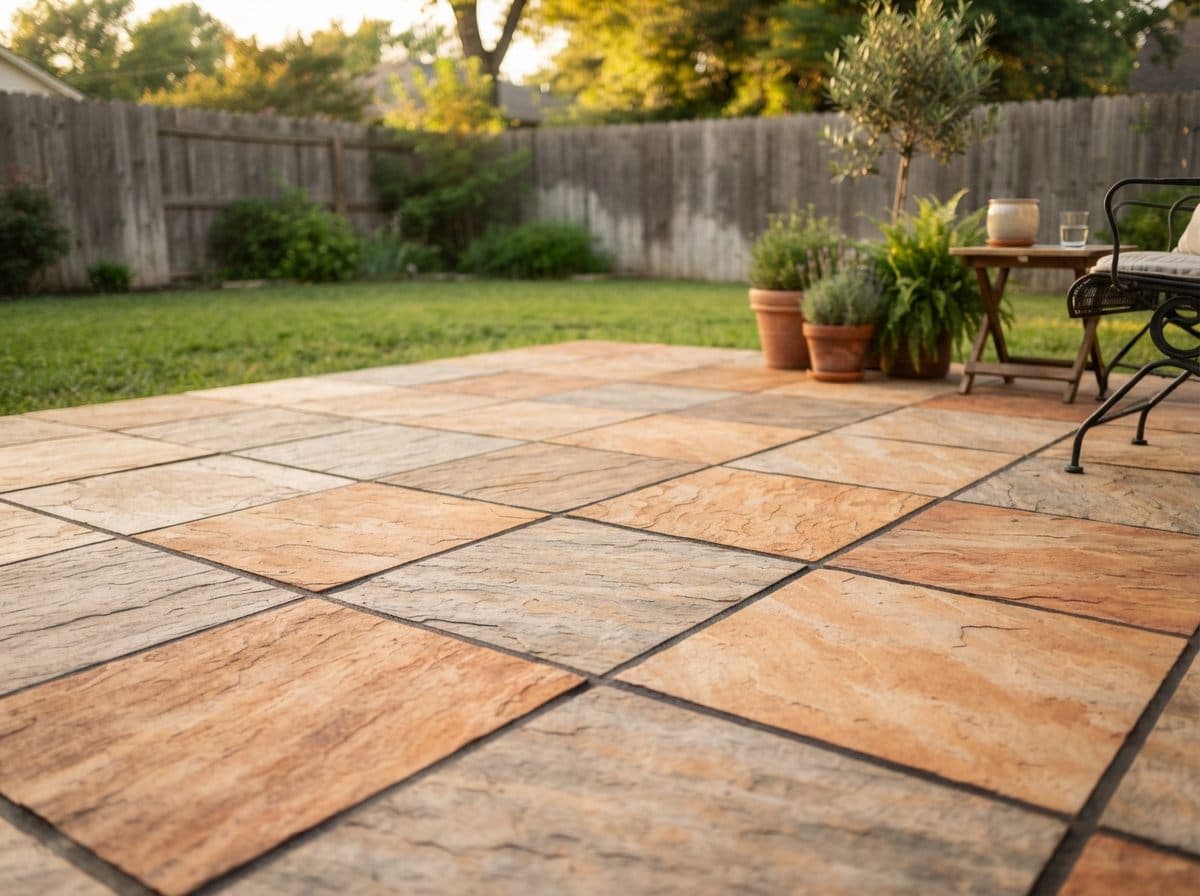
Patio and outdoor tile cleaning has a wrinkle indoor floors don't: the weather is working against you the whole time. Sun, rain, sprinklers, and pool splash keep the surface damp, and anything that stays damp outdoors grows things. Add windblown dirt and pollen settling into the grout, and a patio or pool deck that started out crisp turns dark, green, and slick over a couple of seasons. It's not that the tile failed. It's that outdoor tile is a different cleaning problem than the same tile indoors.
Why the rented pressure washer backfires
The first instinct is to rent a pressure washer and blast it, and that's where a lot of patios get damaged. The narrow, high-pressure tip that finally shifts the black stuff is also strong enough to erode grout right out of the joints and to pit softer stone like travertine and slate. You end up with a cleaner-looking patio and grout lines that are now dished out, cracked, or missing, which lets water get underneath and makes next year's growth worse. People trade a dirty patio for a failing one.
Back off the pressure to protect the grout and the wand barely touches the algae and mildew that have rooted into the surface. So you're stuck between too much pressure and too little. Meanwhile the household cleaners don't carry outdoors well either. Bleach lightens the growth so the patio looks better for a week, but it doesn't scrub anything loose, the roots and grime are still down in the grout, and it comes right back. On stone, bleach and acidic cleaners can also discolor or etch the surface.
And a plain scrub with a deck brush moves grime around the top of the tile without pulling it out of the porous grout, which is where the darkness and the slickness actually live. The patio dries and looks about the same, just wetter for a while.
A rented pressure washer that's finally strong enough to shift the algae is also strong enough to blow the grout out of the joints. We scrub the growth loose with controlled buffing instead.
Why this surface is different
Outdoor tile lives in a wet, dirty environment, and that changes what's growing on it. Algae, moss, and mildew need moisture and they get plenty from rain, sprinklers, and pool splash, so they colonize the porous grout and any textured tile first because those spots hold water longest. That biological film is what turns a deck green and, more importantly, what makes it dangerously slick. A slippery pool deck isn't just ugly, it's a fall waiting to happen. On top of the living stuff, weathered grime, pollen, and windblown soil pack into the same grout lines and go dark.
The materials outside also tend to be the fragile ones. Pool decks and patios are often travertine, slate, quarry tile, or unglazed pavers, all of them porous and some of them soft. That's the exact combination, embedded biological growth plus a surface that can't take aggressive pressure or acid, that makes outdoor tile tricky. You have to hit the growth and the grime hard enough to lift them but stay gentle enough that the joints and the stone survive.
How Safe-Dry® restores it
We clean outdoor tile with controlled buffing instead of brute pressure. A cleaning solution goes down on the surface, then a rotary floor buffer scrubs it into the grout and the tile texture to break down the algae, moss, mildew, and packed grime, working the growth loose from the pores rather than blasting it deeper. The floor is then rinsed and the loosened growth and dirty water are mopped away. The scrubbing is controlled, so it lifts the film out of the joints without cutting the grout away, and on travertine, slate, and other stone we keep the chemistry pH-appropriate so nothing gets etched. The result is a deck that's actually clean down in the grout, not just rinsed on top, and a lot less slick underfoot.
Because we're scrubbing the biological growth loose and rinsing it off rather than just bleaching it pale, it stays gone longer than a quick blast-and-hope job. We'll look at your specific patio, whether it's glazed tile, travertine, slate, or quarry pavers, and clean it the way that material needs. It's covered by our 100% Satisfaction or It's FREE guarantee, there's currently $45 off tile cleaning, and same-day appointments are often available. Find your local Safe-Dry or call 1-800-SAFE-DRY.
We walk through the full deep-cleaning process on our how tile & grout cleaning works page, and every job is backed by our 100% satisfaction guarantee.
Frequently asked questions
Can't I just pressure wash my patio myself?
You can, but it's the most common way patios get wrecked. The high pressure it takes to shift rooted algae and mildew will also erode grout out of the joints and pit softer stone like travertine and slate. Once the grout's gone, water gets underneath and next season's growth is worse. We use controlled buffing that scrubs the growth out without the high pressure that erodes the joints.
Why is my pool deck so slippery even after I clean it?
That slickness is usually a biological film, algae and mildew, that roots into the porous grout and textured tile because those spots stay damp longest. Brushing or bleaching the top makes it look better without removing the film underneath, so it comes back and stays slick. Scrubbing the growth loose out of the grout and rinsing it away is what actually restores traction, not just the look.
Is bleach a bad idea on outdoor tile?
It's a short-term fix at best. Bleach lightens algae and mildew so the deck looks cleaner for a week, but it doesn't scrub anything loose, so the roots and embedded grime stay in the grout and grow back. On stone like travertine and slate, bleach and acidic cleaners can also discolor or etch the surface. Scrubbing the growth out of the grout beats bleaching it pale.
My patio is travertine. Is that safe to deep clean?
Yes, as long as it's done right. Travertine is porous and soft, so it can't take aggressive pressure or acidic cleaners without pitting or etching. We keep the chemistry pH-appropriate and the scrubbing controlled, working the solution into the stone and grout with a floor buffer and then rinsing and mopping it away. That gets the growth and grime up while leaving the stone and joints intact.
Related tile & grout problems we solve
Natural stone
Marble, travertine, and slate are porous and acid-sensitive, so the wrong cleaner etches them for good. We clean stone the pH-safe way.
RoomsTile floors
Mopping pushes dirty water into the grout where it dries, so tile floors go hazy and the grout lines darken year after year.
ProblemMold & mildew in grout
Black and pink growth in grout is alive and rooted in the pores, so bleach only hides it. We scrub it out with deep buffing so it stays gone longer.
Ready to see your grout’s real color again?
Enter your zip code to reach your local Safe-Dry® team. We deep-clean tile and grout across 532 locations in 6 states, with same-day appointments in most areas.