

How to Remove Mold and Mildew From Grout
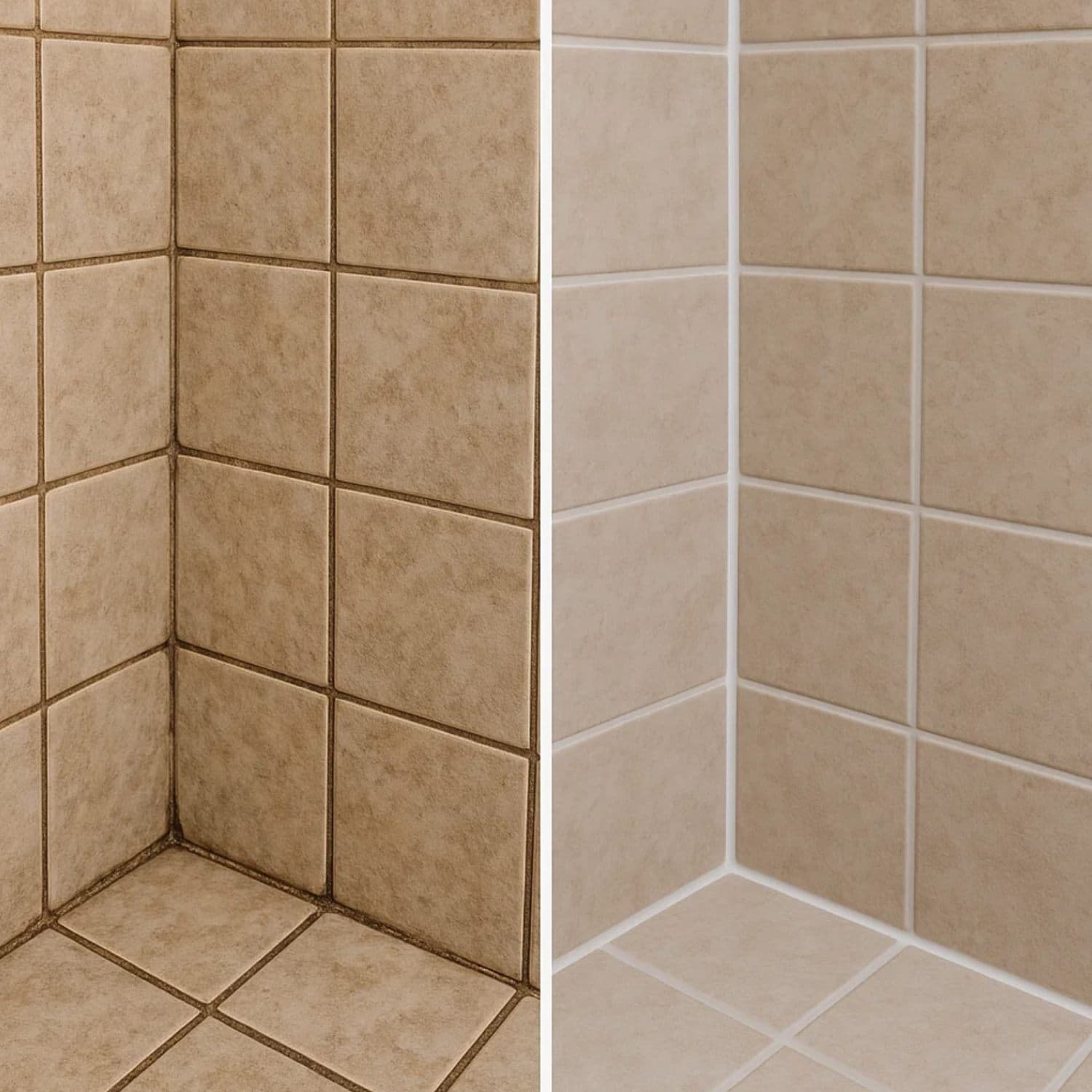
The black and pink stuff creeping through your shower grout is alive and rooted down in the pores. Bleach lightens the color for a few weeks, then it's back. Here's how to actually get it out.
Why mopping never gets grout clean
The go-to move is bleach, or a bleach spray, and it looks like a miracle at first. The black fades, the grout brightens, you feel like you won. Then a few weeks later the dark is creeping back through the same lines. Bleach didn't fail because you used too little. It failed because of what it actually does.
Bleach is a whitening agent. It lifts the color out of the growth so the stain looks gone, but it doesn't remove the growth itself, and it barely penetrates the porous grout. The living part is still down in the pores. You bleached the top, the roots stayed put, and the moment the shower gets damp again the colony grows right back up into view. It's the same growth, not a new one.
Scrubbing has the same ceiling. A brush works the surface of the grout, and this growth lives below the surface where a brush can't go. So the cycle repeats: bleach, brighten, return, bleach again. Meanwhile you're breathing a spore-heavy bathroom, which is the part that actually matters for anyone in the house with allergies or asthma.
Why this surface is different
This is a biological problem, not a dirt problem, and that changes everything. Mold and mildew are living organisms that need three things: moisture, warmth and something to feed on. A shower hands them all three on a schedule. Grout makes it worse because it's porous and it holds water, so those pores stay damp long after the tile face has dried. That's the perfect nursery, and it's why growth shows up in the grout lines and corners first while the glazed tile stays clear.
The growth isn't a stain sitting on the surface, it has roots. The organism sends filaments down into the pore network to anchor and feed, so what you see on top is a fraction of what's actually established below. Pink film is often a bacteria that thrives on soap residue, black is typically a mold, and both dig in the same way. That rooted, below-the-surface part is exactly what surface treatments can't touch, and it's why the growth is a repeat visitor no matter how hard you scrub the top.
How Safe-Dry® restores it
Safe-Dry treats grout growth for what it is, something rooted in the pores rather than sitting on the surface. A cleaning solution is worked into the grout lines, then deep buffing does the real work. A rotary floor buffer scrubs the solution down into the joint and works the growth up and out of the pore network, then the floor is rinsed and the growth, the moisture and the debris are mopped off the floor instead of leaving it to dry back in. We're scrubbing the source out, not bleaching over it.
Because the buffing removes the growth and the moisture and soil it was feeding on, you get a clean result that lasts a lot longer than a bleach cycle, and a bathroom with far fewer spores in the air. It's a real relief for anyone in the house sensitive to mold. On stone tile we keep the solution pH-appropriate so nothing gets damaged, and every visit is backed by our 100% Satisfaction Guarantee. If you're not happy, it's free.
We walk through the full deep-cleaning process on our how tile & grout cleaning works page, and every job is backed by our 100% satisfaction guarantee.
Frequently asked questions
Why does the mold in my grout keep coming back after I bleach it?
Because bleach removes the color, not the growth. It whitens the mold so the stain looks gone, but the living organism is rooted down in the porous grout where bleach doesn't reach. The next time the shower gets damp, it grows right back up through the same lines. You have to remove the growth from the pores, not lighten it, to actually break the cycle.
Is the pink or black growth in my grout a health concern?
It can be, especially for anyone with allergies, asthma or a weaker immune system. Mold releases spores into the air, and a shower keeps producing them as long as the growth is established. The black is usually a mold and the pink is often a bacteria that lives on soap residue. Neither belongs in a space you breathe in every day, which is why removing it at the source matters more than just hiding the color.
Is bleaching the grout enough, or do I really need it removed?
Bleaching hides it, removing it solves it. If you're fine repeating the bleach every few weeks, the color will keep coming back because the roots are still in the grout. Deep buffing scrubs the growth up out of the pores, so you're not fighting the same colony on a loop. If the growth is widespread or keeps returning fast, that's the sign the roots are established and surface treatment won't cut it.
Will this damage my grout or tile?
No. The buffing uses a cleaning solution matched to your tile, so on natural stone we stay pH-appropriate and never use acids or harsh bleach. It's gentler on the grout than repeated bleaching, which can weaken and lighten grout over time. You get the growth removed without trading it for damaged tile.
Related tile & grout problems we solve
Shower & bathroom grout
Shower grout stays wet, so soap scum, body oils, and minerals soak into the lines and turn them dark, orange, or pink.
ProblemHard water stains
That cloudy white film is mineral scale from hard water. We loosen it and scrub it off the tile and out of the grout, then rinse it away, using the right solution for your surface.
ProblemDiscolored grout
Dark grout lines usually aren't stained, they're full of soil the pores soaked up. Professional buffing scrubs it back out and the original color returns.
Ready to see your grout’s real color again?
Enter your zip code to reach your local Safe-Dry® team. We deep-clean tile and grout across 532 locations in 6 states, with same-day appointments in most areas.