
How to Remove Hard Water Stains From Tile
The chalky white haze on your shower tile, glass and grout is limescale left behind by hard water. It builds up faster than a regular cleaner can wipe it off, and it needs the right approach for your tile type.
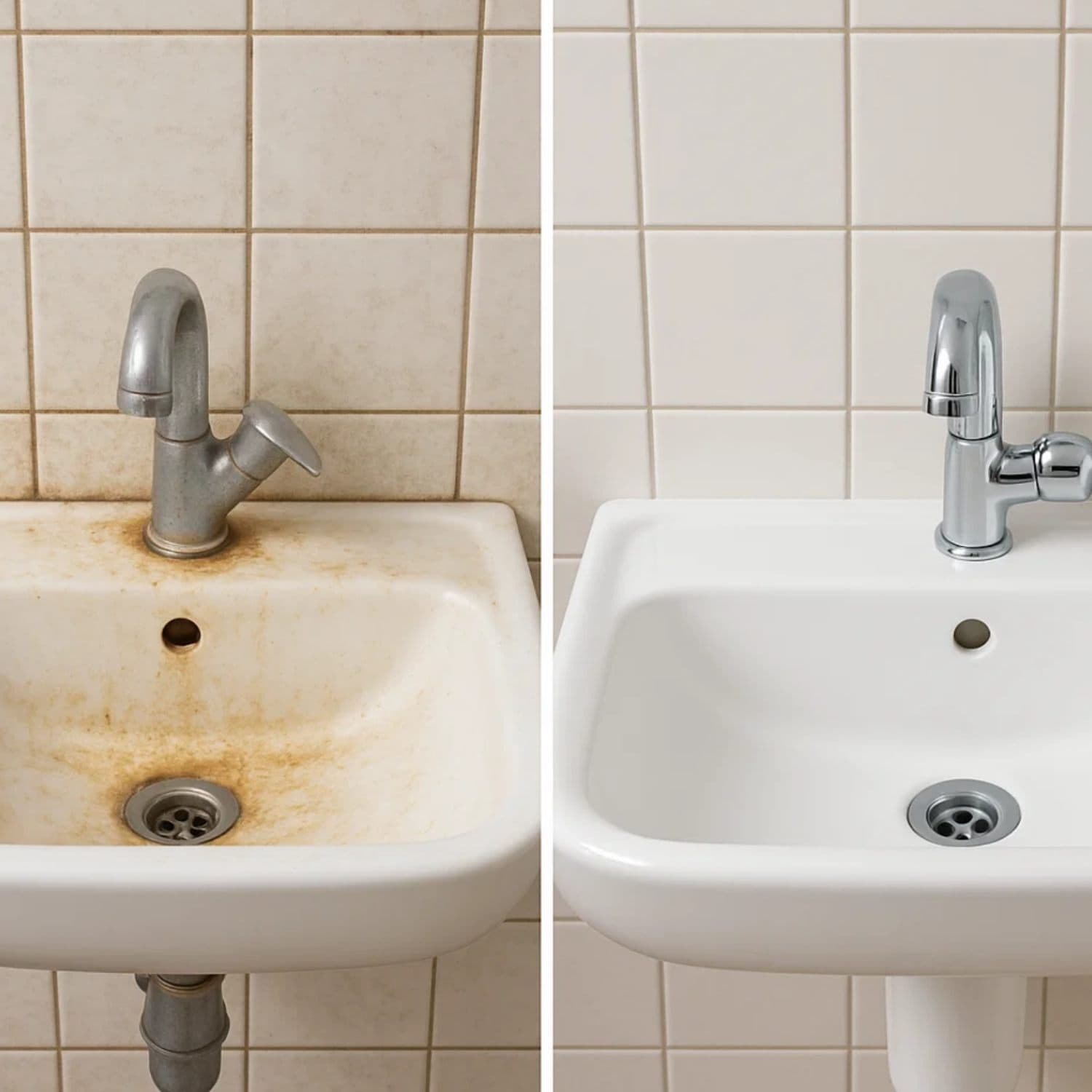
Why mopping never gets grout clean
The everyday shower spray does fine on soap scum and grime, but it barely touches mineral scale. Limescale is a hardened mineral deposit, closer to a thin layer of rock than a stain, so wiping it with a general cleaner just polishes the top and leaves the crust behind. You end up cleaning the same spot over and over and wondering why the cloudiness never clears.
So people escalate to the internet's favorite fix: vinegar, lemon, or a strong acidic descaler. On ceramic or porcelain in a pinch that can work, but it's a real risk on the wrong surface. Acid eats calcium, and marble, travertine and other natural stone are largely calcium. Pour an acid on them and you don't dissolve the stain, you etch the tile, leaving dull cloudy spots that are permanent and worse than what you started with.
Even on tile that can take a mild acid, the DIY version usually attacks the visible surface film and never addresses the scale that's crept into the grout lines and the corners around the faucet. So the tile looks a little better for a week and the shower fogs right back up, because the deposit sitting in the porous grout is still feeding the problem.
Why this surface is different
Hard water carries dissolved calcium and magnesium. Every time it sits on a surface and evaporates, the water leaves but the minerals stay, drying into a thin crust of scale. In a shower this happens dozens of times a day on the same square of tile, so the deposit layers up quickly. That's why the wall by the shower head and the base around the faucet cloud over first. They get wet most, so they scale most.
The behavior splits by surface, which is the whole reason one product can't cover a bathroom. On glazed glass and glossy tile, scale sits on top as a removable crust, and the trick is dissolving it without scratching the finish. In the grout lines it's different, because the minerals wick into the pores and deposit inside them, so a surface wipe never gets it. And on natural stone the deposit and the tile are chemically similar enough that anything aggressive enough to strip the scale can also damage the stone. Three surfaces, three problems, all in the same shower.
How Safe-Dry® restores it
Safe-Dry starts by identifying your tile, because the solution has to match the material. On ceramic and porcelain we can use a stronger scale-cutting solution safely. On marble, travertine and other stone we deliberately keep the pH gentle, never acids, so the scale comes off without touching the finish. The solution is worked in to break the mineral bond, then a rotary floor buffer scrubs it down into the grout lines and across the tile, and the loosened deposit and solution are rinsed and mopped away in the same pass.
Because we're scrubbing it loose and rinsing it away rather than just wiping, the scale that had crept into the porous grout comes out too, not just the film you can see on the face of the tile. The result is tile and grout that read clear again instead of hazy, without a scratched or etched finish. Same-day appointments are often available, and every visit is backed by our 100% Satisfaction Guarantee. If you're not happy with the result, it's free.
We walk through the full deep-cleaning process on our how tile & grout cleaning works page, and every job is backed by our 100% satisfaction guarantee.
Frequently asked questions
What's the difference between hard water stains and soap scum?
Soap scum is a greasy, waxy film from soap reacting with minerals, and it wipes off with the right cleaner. Hard water scale is a hardened mineral crust left when water evaporates, and it's much tougher, more like a thin mineral deposit than a film. They often sit right on top of each other in a shower, which is why one cleaner rarely handles both. The scale is the part that keeps coming back.
Can't I just use vinegar or a lemon on hard water stains?
Sometimes, but be careful what you put it on. On ceramic or porcelain a mild acid can cut light scale. On marble, travertine or other natural stone, acid etches the surface and leaves permanent dull spots, because the stone is largely calcium and the acid attacks it. If you're not certain what your tile is, don't guess with an acid. That mistake can't be undone.
Why do the hard water stains keep coming back after I clean them?
Two reasons. First, if you're on hard water, fresh minerals deposit every time the surface dries, so it's an ongoing process, not a one-time stain. Second, most home cleaning only clears the film on the tile face and leaves scale buried in the porous grout lines, which keeps the shower looking cloudy. Scrubbing the deposit loose out of the grout, not just wiping it off the tile, gives you a much longer stretch of clear.
Will professional cleaning damage my stone shower?
No. On natural stone we intentionally use pH-appropriate solutions and never acids, which is exactly what protects the finish. The scale is loosened by the buffer's scrubbing and then rinsed and mopped away rather than dissolved with something harsh. That's the safe way to clear mineral buildup off marble, travertine and slate without the etching that DIY acid causes.
Related tile & grout problems we solve
Shower & bathroom grout
Shower grout stays wet, so soap scum, body oils, and minerals soak into the lines and turn them dark, orange, or pink.
ProblemGrout haze & film
Foggy tile is a film on top: leftover grout haze or years of soap and cleaner residue. More mopping adds to it. We cut it and scrub it off so the glaze reads clear.
ProblemDiscolored grout
Dark grout lines usually aren't stained, they're full of soil the pores soaked up. Professional buffing scrubs it back out and the original color returns.
Ready to see your grout’s real color again?
Enter your zip code to reach your local Safe-Dry® team. We deep-clean tile and grout across 532 locations in 6 states, with same-day appointments in most areas.