
Commercial Tile & Grout Cleaning
High-traffic lobbies, restrooms, and dining floors where dark grout reads as a dirty business and slick tile is a liability. We restore the appearance and the traction, scheduled around your hours.
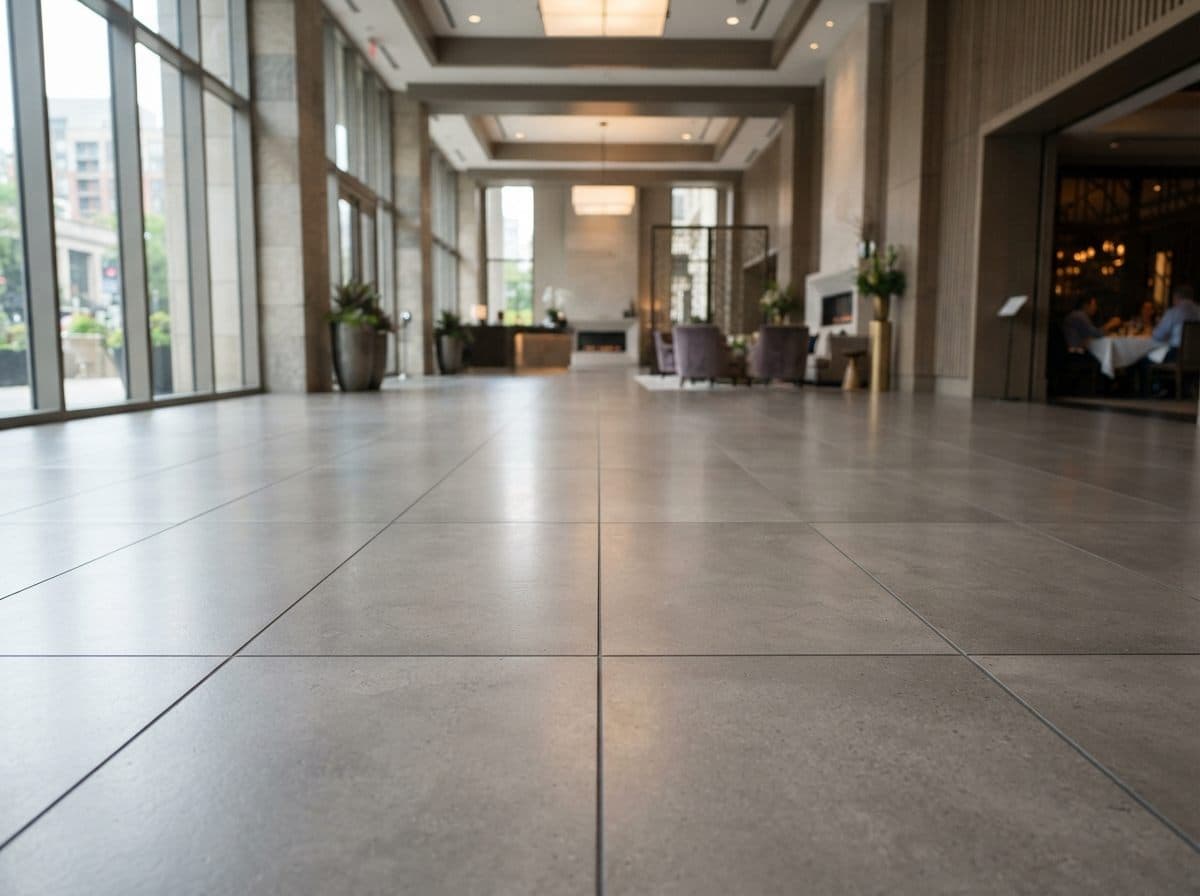
In a commercial space, the tile floor is part of how customers judge the business. A lobby with gray grout lines, a restroom that looks grimy no matter how often it's mopped, a dining room floor that's gone dull, all of it registers with people before they've thought about why. Commercial tile and grout cleaning is really two jobs at once: keeping the place looking sharp enough that nobody second-guesses the business, and keeping the floor safe enough that nobody slips. A cleaning crew with a mop and a bucket can't get either one all the way there.
Why routine mopping isn't keeping up
Your janitorial crew mops every night, and the floor still looks tired. That's not a knock on them, it's what mopping does at scale. A mop lifts loose soil off the tile face and then spreads gray water across the whole floor, and in a high-traffic space that water carries a lot of dirt straight into the grout lines. Night after night, the grout darkens while the tiles stay passable. Routine mopping keeps a floor from getting filthy. It doesn't get embedded soil back out of porous grout, and it never has.
The mop-water problem is worse in the rooms customers judge you on. Restroom grout absorbs everything and goes dark and unsanitary-looking fast. Entryways collect grit and moisture tracked in from outside. And a restaurant kitchen is a category of its own: airborne grease settles onto the floor, bonds with dirt, and turns the grout into a dark, slick film that a mop just smears. That greasy film is also a slip hazard for your staff, which turns a cosmetic problem into a safety and liability one.
Store-bought and janitorial cleaners can quietly make it worse by leaving residue that grabs new soil, so the floor dulls faster between services. Over months, the space develops that permanently-dingy look that reads as a business that doesn't keep up, even when your team is cleaning it every single day.
Dark grout in a lobby reads as a business that doesn't keep up, and a greasy kitchen floor is a slip claim waiting to happen. This is appearance and liability, not just clean.
Why this surface is different
Commercial floors fail faster than residential ones for a simple reason: volume. A retail lobby or a busy restroom can see more foot traffic in a week than a home floor sees in a year, and every one of those steps grinds grit into the grout and polishes soil into any texture on the tile. Porous grout absorbs moisture and soil, and in a commercial setting it's getting hit constantly, so it saturates and darkens far faster than a homeowner would expect. The tile face usually holds up. The grout is where the wear shows.
Then there's the mix of contaminants, which changes room by room. Restrooms deal with moisture and biological soil that soak into the grout and hold odor. Kitchens deal with grease that bonds to dirt and makes tile dangerously slick. Entryways and lobbies deal with tracked-in grit, salt, and water. Each of those needs a different cleaning solution and real scrubbing pressure to break it down, and a one-bucket-fits-all mop routine treats them all the same. That's the gap between a floor that's technically been cleaned and one that actually looks and performs clean.
How Safe-Dry® restores it
We bring deep professional buffing into your space and work around your schedule, including after hours and overnight, so we're not in the way of customers or service. The right cleaning solution for that room, degreasing chemistry in a kitchen, pH-appropriate solution on any natural stone, goes down on the floor, then a rotary floor buffer scrubs it into the grout and tile, working the soil loose from the pores. The floor is then rinsed and the loosened soil, grease, and water are mopped away. The grout comes back toward its original color, the greasy film comes off the kitchen floor, and the tile gets its traction back, which matters as much for your slip-and-fall exposure as it does for appearance. Restroom grout that read as dirty starts reading as maintained again.
This runs alongside your janitorial program, it doesn't replace it. Your crew keeps the floor up day to day; we do the periodic deep buffing that a mop physically can't, on whatever cadence your traffic calls for. Whether it's one restaurant or a portfolio of retail or medical sites, it's backed by our 100% Satisfaction or It's FREE guarantee, and there's currently $45 off tile cleaning. Find your local Safe-Dry or call 1-800-SAFE-DRY to set up service.
We walk through the full deep-cleaning process on our how tile & grout cleaning works page, and every job is backed by our 100% satisfaction guarantee.
Frequently asked questions
Our janitorial team mops nightly. Why do we still need this?
Because mopping and deep buffing do different jobs. A mop rides across the tile and skims over the recessed grout line, spreading gray water into the joints without any real scrubbing pressure, so it can't pull embedded soil back out of a porous joint. In high-traffic commercial space the grout darkens no matter how diligent the nightly crew is. We do the periodic deep buffing that a mop physically can't, running a rotary floor buffer whose rotating brush gets down into the grout and scrubs the soil loose, running alongside your janitorial program, not replacing it.
Can you clean around our business hours?
Yes. We schedule around your operation, including after hours and overnight, so a lobby, dining room, or restroom is clean and back in service before you open. Same-day appointments are often available when something needs attention fast. Tell us your hours and we'll fit the work into them.
Our restaurant kitchen floor is greasy and slick. Can you fix that?
Yes, and it's one of the more important calls to make, because a greasy kitchen floor is a slip hazard for your staff. Airborne kitchen grease settles and bonds with dirt into a film that a mop only smears around. We put down degreasing chemistry and scrub it into the grout and tile with a rotary floor buffer, then rinse and mop it away, which lifts the grease off and restores traction rather than just moving it.
Is this a liability issue or just about looks?
Both, and they're linked. Dark grout in a lobby or restroom reads as a business that doesn't keep up, which is a real cost with customers. Slick tile, especially a greasy kitchen floor or a wet restroom, is a slip-and-fall exposure that's a real cost with your insurer. Restoring appearance and traction at the same time addresses both, which is why facility managers treat deep tile cleaning as maintenance, not cosmetics.
Related tile & grout problems we solve
Tile floors
Mopping pushes dirty water into the grout where it dries, so tile floors go hazy and the grout lines darken year after year.
ProblemDiscolored grout
Dark grout lines usually aren't stained, they're full of soil the pores soaked up. Professional buffing scrubs it back out and the original color returns.
RoomsEntryways & mudrooms
Tracked-in grit, sand, road salt, and mud get ground into entry and mudroom grout, making it the highest-traffic, dirtiest lines in the house.
Ready to see your grout’s real color again?
Enter your zip code to reach your local Safe-Dry® team. We deep-clean tile and grout across 532 locations in 6 states, with same-day appointments in most areas.