

Entryway & Mudroom Tile Cleaning
Every bit of the outdoors comes through this door on the bottom of somebody's shoes. Your entry and mudroom tile take more abuse than any floor in the house, and the grout shows it first.
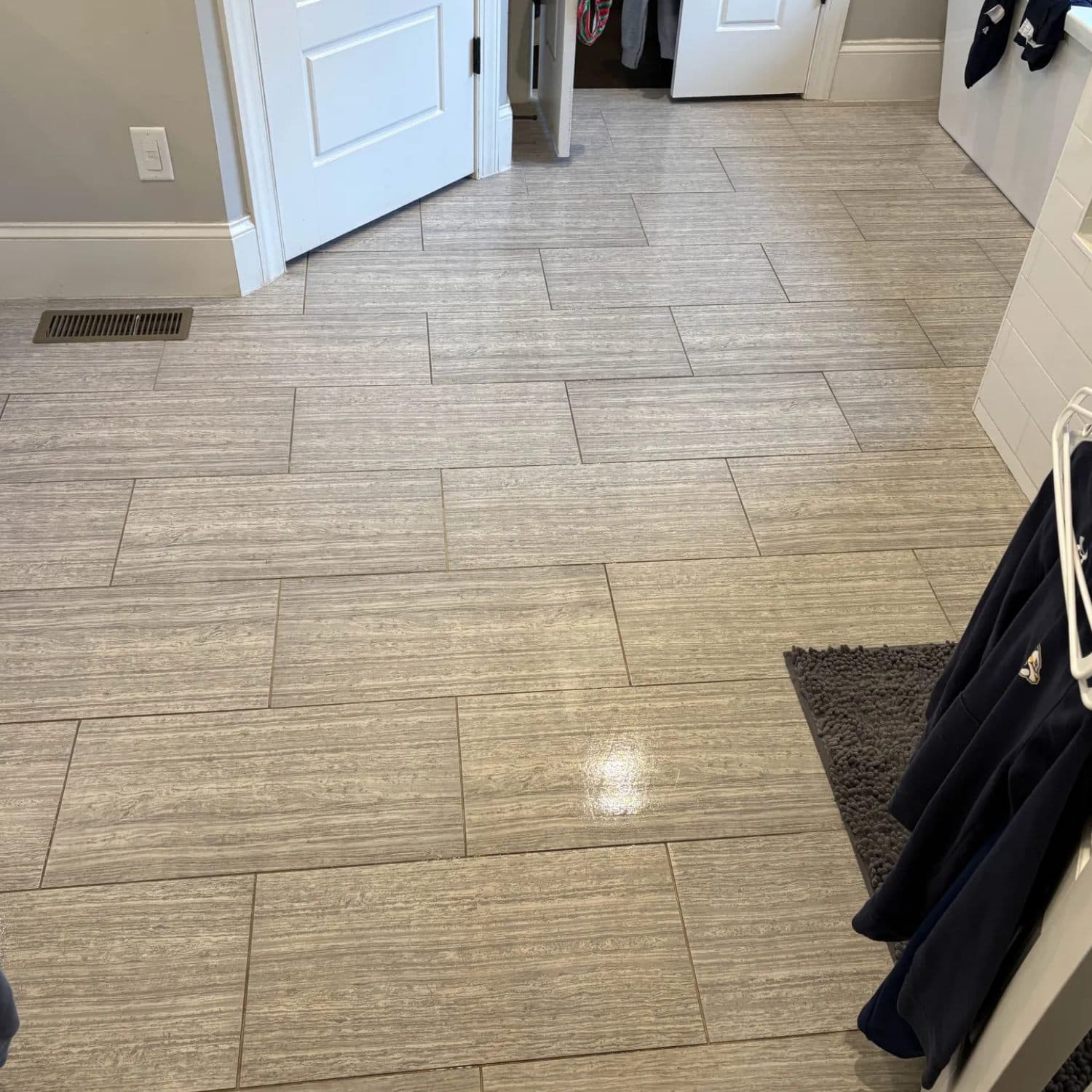
Why the mop gives up on entryway grout
Entry grout is the one spot where you can mop, look down, and swear you barely made a dent. That's not the mop being weak. The soil here isn't a light film, it's ground-in grit and dried mud that's been packed into the lines by weeks of foot traffic. A mop glides right over the top of that, dampening it without dislodging it, and the dirty water it does pick up gets dropped straight back into the next stretch of grout.
Store cleaners struggle here for a different reason than in a kitchen or bath. The problem in an entry isn't grease or soap, it's abrasive mineral soil, sand, clay, and salt physically wedged into the pores. Chemistry alone doesn't lift that. It has to be flushed out with force, and a mop simply can't generate it. You can scrub a small patch by hand and get somewhere, but nobody hand-scrubs an entire entry every week, so the grime keeps winning by attrition.
Road salt in winter adds a nasty twist. As it dries it leaves a white, crusty haze on the tile and works into the grout, and plain mopping just dissolves it and redeposits it a foot away. You wipe one spot clean and bloom a chalky film somewhere else. It looks like the floor is fighting you, and in a sense it is.
The grit tracked through your front door acts like sandpaper. Every step grinds it deeper into the grout, which is why this is the dirtiest floor in the house and the hardest to mop clean.
Why this is the hardest-working grout in your home
An entryway or mudroom is a filter. It catches the outdoors before it reaches the rest of the house, which is exactly what you want, and it means this floor absorbs a concentrated dose of everything nobody wants tracked further in. Sand, grit, clay-heavy mud, road salt, and pet paw traffic all pile up in a small area that gets walked over constantly. Nowhere else in the house sees that combination at that volume.
What makes it destructive is that the soil is abrasive, and abrasive soil does more than sit there. Grit acts like sandpaper underfoot. Every step grinds those hard particles down into the grout, wedging them into the pores and physically scouring the lines a little deeper each time. That's why entry grout doesn't just look dirty, it looks worn and permanently gray, and why the darkening runs deeper into the pores than the soft, greasy soil you'd find in a kitchen. The grit is embedded, not resting on top, so anything that doesn't reach down into the pore and drag it out leaves most of it behind.
How Safe-Dry® resets high-traffic grout
This is where the buffer earns its keep. Your technician works a cleaning solution into the grout to release the packed-in soil, then runs a professional floor buffer over the lines. The rotating brush is doing the physical job the mop never could, scrubbing loose the grit, dried mud, and salt that's been ground down into the pores and reaching into the recessed joint a flat mop just skims over. Then the floor is rinsed and that slurry is mopped off, so the abrasive soil actually leaves the house instead of getting redistributed across the tile.
Because the salt and mineral haze dissolves into the rinse water, it comes up with everything else rather than blooming somewhere else the way it does with mopping. On ceramic and porcelain we scrub it firm. On a natural stone entry we switch to a pH-balanced, acid-free solution so the stone stays safe. When we're finished, the grout in the busiest doorway in your house is back to a color it hasn't been in a long time, and it's covered by our 100% Satisfaction guarantee. If you're not happy, it's free.
We walk through the full deep-cleaning process on our how tile & grout cleaning works page, and every job is backed by our 100% satisfaction guarantee.
Frequently asked questions
Why is my entryway grout so much darker than the rest of my tile?
Because it takes the heaviest, grittiest soil in the house, and it takes it constantly. Sand, mud, and salt come in on shoes and paws, then foot traffic grinds those abrasive particles down into the grout pores. The soil is physically wedged in and scoured deep, so entry grout ends up darker and more worn-looking than grout anywhere else in the home.
Can you get the white salt haze off my winter entry?
Yes. Road salt leaves a chalky mineral film that mopping just dissolves and smears to a new spot. Our buffer scrubs the salt loose into the cleaning solution and then the floor is rinsed and mopped, so it leaves with the dirty water instead of blooming somewhere else. The tile and grout come up clear rather than hazy.
The grit makes it feel like sandpaper. Is the floor damaged?
Usually it's soil, not damage. That gritty feel is loose and embedded sand sitting in and on the grout, and the buffer scrubs it out. Once the abrasive soil is gone the floor feels smooth again. If a stone tile has actually been scratched or etched that's a separate issue, and your technician will point it out honestly rather than pretend a clean will fix it.
How often should a high-traffic entry be professionally cleaned?
More often than the rest of your tile, simply because it works harder. Many homes do the entry and mudroom on a shorter cycle than the living areas since that's where the abrasive soil concentrates. Your technician can suggest a realistic interval based on how much traffic, weather, and pet activity your door actually sees.
Related tile & grout problems we solve
Tile floors
Mopping pushes dirty water into the grout where it dries, so tile floors go hazy and the grout lines darken year after year.
ProblemDiscolored grout
Dark grout lines usually aren't stained, they're full of soil the pores soaked up. Professional buffing scrubs it back out and the original color returns.
StoneNatural stone
Marble, travertine, and slate are porous and acid-sensitive, so the wrong cleaner etches them for good. We clean stone the pH-safe way.
Ready to see your grout’s real color again?
Enter your zip code to reach your local Safe-Dry® team. We deep-clean tile and grout across 532 locations in 6 states, with same-day appointments in most areas.