

Kitchen Tile & Grout Cleaning
The kitchen is the one room where the dirt fights back. Cooking grease drifts onto the floor and the backsplash, mixes with tracked-in soil, and turns your grout into a sticky film that a mop only pushes around.
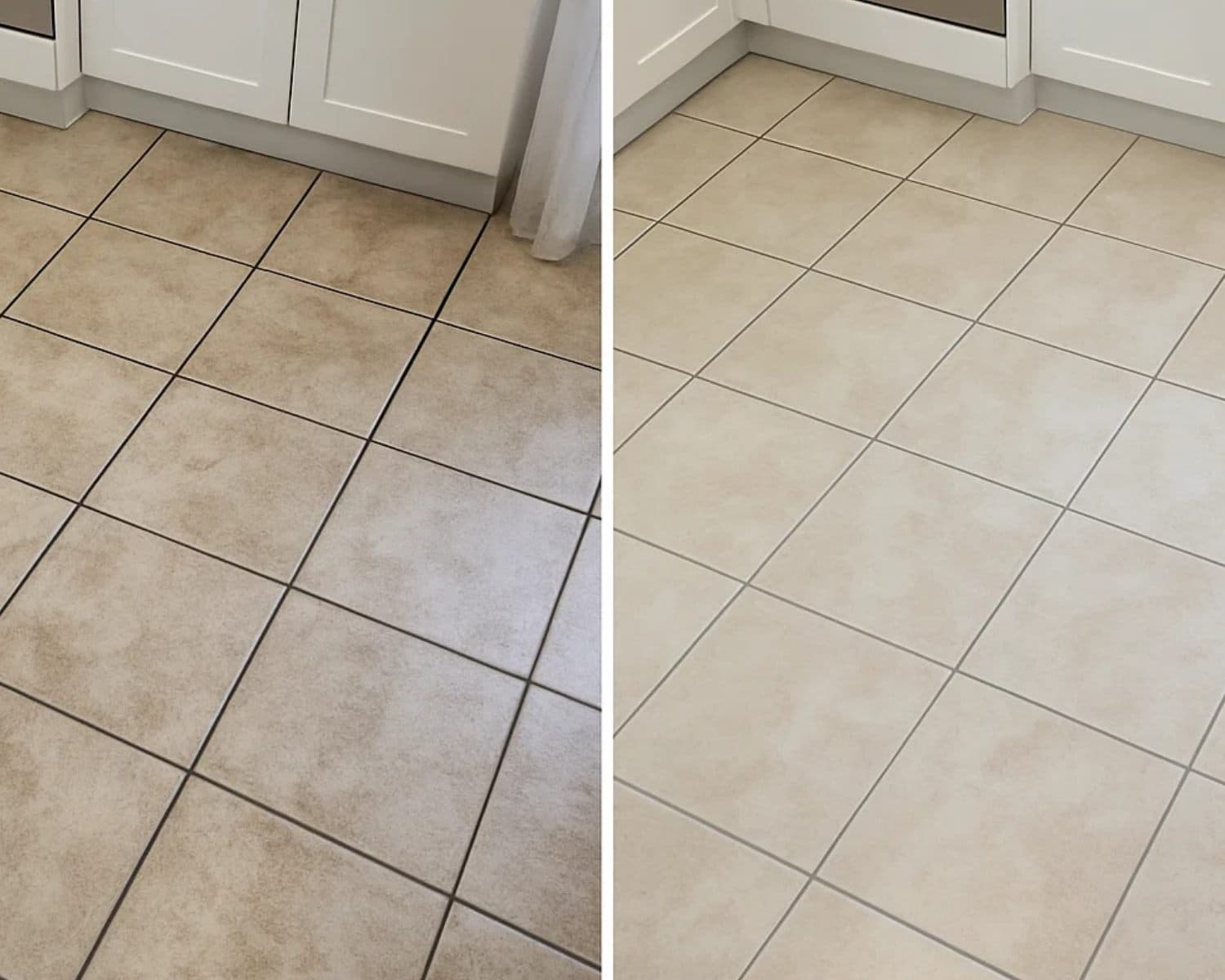
Why mopping a kitchen floor just moves the grease
Here's what happens every time you mop. You dunk the mop, wring it out, and drag it across the tile. The tile face wipes clean because it's glazed. But that mop is now carrying dissolved grease and dirty water, and it drops that water into the low spots, which are the grout lines. The water evaporates and leaves the grease and soil behind, right where you can't wipe it. You just relocated the mess into the grout.
General-purpose floor cleaner isn't built for the problem either. Kitchen grime isn't ordinary dust, it's greasy, and grease needs a degreaser to break its grip, not a mopping solution meant for tracked-in dirt. So the cleaner loosens the top film, the mop smears it into the pores of the grout, and a week later the lines look darker than the day you cleaned them.
The backsplash has its own version of this. Grease vapor from the stove rises and lands on the wall tile behind it, then goes tacky and starts catching dust and airborne soil. Wiping it with a sponge and dish soap thins it out but rarely lifts it, and the grout lines up there, being porous, hold onto it the longest.
Grease and water don't mix. If your cleaner isn't actually cutting the grease, your mop is just wetting it and pressing it into the grout.
Why kitchen grout gets a greasy film nowhere else does
Cooking is basically an aerosol machine. Every time you fry, sear, or even boil something oily, microscopic droplets of grease go airborne and drift out across the room before they settle. They land on the floor tile, the backsplash, the whole kitchen, and they don't stay dry. Grease is sticky, so the moment it lands it starts grabbing dust, crumbs, and whatever your shoes track in. That's the film. It's not dirt on top of grease, it's the two bonded into one gummy layer.
Grout makes it worse because it's porous and it sits below the tile face. Every footstep presses that greasy soil down into the lines, and the pores hold it like a wick. On a smooth glazed tile the film gets buffed off by traffic and cleaning. In the grout it just accumulates, which is exactly why your floor can look mostly okay while the grout lines read as a dark grid. The grease also refuses to rinse with plain water, because oil and water don't mix, so any cleaning that isn't actually cutting the grease is just wetting it.
How Safe-Dry® degreases floors and backsplash
The fix starts with actually breaking the grease, not diluting it. Your technician applies a degreasing solution suited to greasy kitchen soil and works it into the grout, then runs a professional floor buffer over it. That's where the real work happens, because the buffer's rotating brush scrubs the solution down into the grout lines and reaches into the recessed joint a flat mop just rides over, breaking the bonded film loose from the pores. Then the floor gets rinsed and the loosened grease is mopped straight off, dirty water and grease and all, so nothing settles back down into the lines.
The backsplash gets the same treatment scaled to a wall. We flush the grout between the tiles and clean the tile face, pulling the tacky grease layer off instead of thinning it around. On floors we can run it hot on ceramic and porcelain, and shift to a pH-balanced approach if you've got natural stone tile. Either way the grout comes back to its true color, and it's covered by our 100% Satisfaction guarantee. Not happy, it's free.
We walk through the full deep-cleaning process on our how tile & grout cleaning works page, and every job is backed by our 100% satisfaction guarantee.
Frequently asked questions
Why does my kitchen grout look darker after I mop?
Because mopping moves the greasy soil around instead of removing it. The mop dissolves the film off the tile face, then drops that dirty, greasy water into the grout lines as it dries. The tile looks clean and the grout looks worse, because you've concentrated the grime exactly where it can soak in and stay.
Can you clean the backsplash too, or just the floor?
Both. The backsplash gets the same problem as the floor, just from above, since grease vapor off the stove lands on the wall tile and goes tacky. We flush the grout lines and clean the tile face on the backsplash the same way we do the floor, so the whole kitchen matches instead of just the part you walk on.
Regular floor cleaner isn't working. What's different about grease?
Grease needs a degreasing solution and a machine that scrubs it down into the grout, and most floor cleaners are formulated for ordinary tracked-in dirt, not oil. So they loosen the surface but leave the greasy film behind in the grout. Our process uses a solution meant for greasy soil plus a professional buffer that scrubs it loose, which is what it takes to break that bond and lift it out.
Will the buffer hurt my tile or grout?
No. Ceramic and porcelain handle machine scrubbing easily, and the pressure is controlled so it cleans the grout without damaging it. If you've got natural stone tile we adjust the solution to keep it pH-balanced and stone-safe. The degreasing solution plus the buffer's scrubbing action is what makes greasy kitchen soil let go, so that combination is doing the heavy lifting, not harming anything.
Related tile & grout problems we solve
Tile floors
Mopping pushes dirty water into the grout where it dries, so tile floors go hazy and the grout lines darken year after year.
ProblemDiscolored grout
Dark grout lines usually aren't stained, they're full of soil the pores soaked up. Professional buffing scrubs it back out and the original color returns.
ProblemGrout haze & film
Foggy tile is a film on top: leftover grout haze or years of soap and cleaner residue. More mopping adds to it. We cut it and scrub it off so the glaze reads clear.
Ready to see your grout’s real color again?
Enter your zip code to reach your local Safe-Dry® team. We deep-clean tile and grout across 532 locations in 6 states, with same-day appointments in most areas.