
Cleaning Porcelain & Ceramic Tile
The glazed face is the easy part. It's the grout lines and the micro-texture on matte and wood-look porcelain that hold grime a mop can't reach, which is why the floor looks dull the day you clean it.
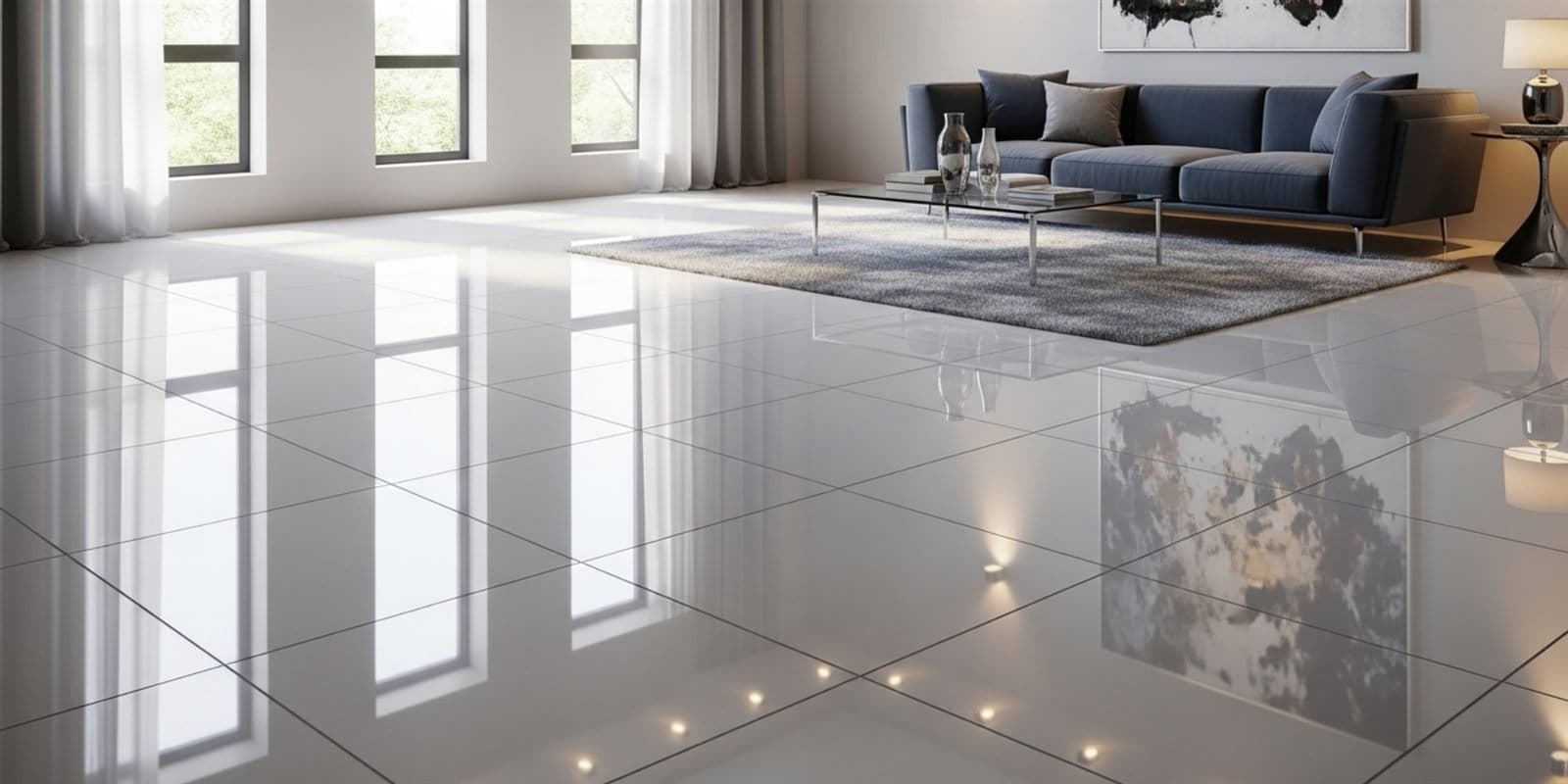
Ceramic and porcelain are the tile you'll find in most homes, and for good reason. The glazed face is tough, water-resistant, and genuinely easy to wipe. So it catches people off guard when the floor looks hazy and gray right after they've mopped it. The tile isn't the problem. The grout between the tiles is, and on a lot of newer porcelain, so is the texture of the tile itself.
Why the floor looks dingy right after you mop
Here's what a mop actually does on a tile floor. It lifts the loose dirt off the flat, glazed part of each tile, which is why the tiles themselves come up looking clean. Then it drags that dirty water across the whole floor, and the low points, the grout lines and any texture in the tile, are exactly where the gray water settles and dries. You cleaned the high spots and reloaded the low spots. That's the dingy look, and mopping harder makes it worse because you're just making more dirty water to push into the grout.
Store-bought tile and floor cleaners add their own problem. Most leave a thin residue behind, and that residue is sticky. It grabs the next round of dust and footprints, so the floor gets dull faster after each cleaning, not slower. A lot of people read that as "my tile is worn out" when it's really a buildup of old cleaner sitting in the texture and the grout.
And no home method gets down into a grout line. Grout is porous. Dirt embeds in it and bonds, and a mop head can't fit into the recessed joint or apply any real pressure there. You can scrub a single line with a toothbrush and a paste and see it come back, then realize you've got a few hundred more feet of it and no realistic way to do the whole floor by hand.
The tile is fine. On porcelain and ceramic the dirt lives in the grout and in the tile's micro-texture, both below the level a mop rides at, so the floor looks dull the same day you clean it.
Why this surface is different
The glaze on ceramic and porcelain is basically a fired-on glass coating. It's non-porous, which is why liquid beads on top and the tile face wipes clean so easily. That part almost never holds dirt. What holds dirt is everything the glaze doesn't cover: the grout lines, and increasingly the tile surface itself. Modern porcelain is often made to look like honed stone, slate, or wood, and those matte and textured finishes have a fine micro-texture pressed into them on purpose. That texture reads as "natural" underfoot and grips soil the same way a matte photo hides fingerprints better than a glossy one.
So the soil sits in two places a mop skips: down in the porous grout, and up in the peaks and valleys of the tile's texture. On a smooth, glossy old-school ceramic tile the grout is the whole battle. On a matte wood-look porcelain plank, the tile face is fighting you too. Either way the dirt is in the recesses, below the level a flat mop rides at, and it needs to be pulled out rather than wiped over.
How Safe-Dry® restores it
Our deep buffing is built for exactly this geometry. A cleaning solution gets scrubbed into the grout lines and worked into the tile's micro-texture by a professional floor buffer, whose rotating brush reaches down into the recessed joint and the tiny valleys a flat mop rides over and breaks the bond holding the embedded soil. Then the floor is rinsed and the loosened dirt and solution are mopped back off. Nothing gets pushed around and nothing dries back into the low spots, so the grout comes back toward its original color and the textured tile stops looking gray. On glazed ceramic and porcelain we don't have to worry about acid etching, so we can clean it firmly without harming the glaze.
The difference you feel is that the floor stays clean longer, because we've removed the old cleaner residue and the embedded soil that used to grab new dirt within a day. It's the same process regardless of whether you've got glossy bathroom ceramic or a matte wood-look porcelain great room. It's covered by our 100% Satisfaction or It's FREE guarantee, there's currently $45 off tile cleaning, and same-day appointments are often available. Find your local Safe-Dry or call 1-800-SAFE-DRY to book.
We walk through the full deep-cleaning process on our how tile & grout cleaning works page, and every job is backed by our 100% satisfaction guarantee.
Frequently asked questions
Why does my tile floor look dull right after I mop it?
Because a mop cleans the flat, glazed tops of the tiles and then leaves the dirty water in the low spots, the grout lines and any texture in the tile, where it dries gray. You cleaned the high points and reloaded the low ones. Store-bought cleaners make it worse by leaving a sticky residue that grabs new dirt fast. Getting the soil out of the grout and texture, rather than over it, is what actually fixes the dull look.
My porcelain is smooth on top but still looks dingy. What's going on?
A lot of newer porcelain is made to imitate stone or wood, so it has a fine matte micro-texture pressed into the surface. That texture grips soil the way a matte finish hides fingerprints, and a flat mop skims right over it. The dirt is sitting in the tiny peaks and valleys of the tile plus the grout. The buffer scrubs it out of both, which a wipe-over can't do.
Do you clean the grout and the tile, or just the grout?
Both, in the same pass. The glazed tile face rarely holds much dirt, but textured and matte porcelain does, and the grout always does. Our buffer works the solution into the grout lines and the tile texture, then the floor is rinsed and the loosened soil is mopped back off, so the whole floor comes clean rather than just the parts a mop can reach.
Will your process hurt a glazed ceramic or porcelain tile?
No. The glaze is a fired-on, glass-like coating that's non-porous and tough, so unlike natural stone it isn't acid-sensitive and doesn't etch. We can clean it firmly and get into the grout and texture without harming the tile. Backed by our 100% Satisfaction or It's FREE guarantee.
Related tile & grout problems we solve
Natural stone
Marble, travertine, and slate are porous and acid-sensitive, so the wrong cleaner etches them for good. We clean stone the pH-safe way.
RoomsTile floors
Mopping pushes dirty water into the grout where it dries, so tile floors go hazy and the grout lines darken year after year.
ProblemDiscolored grout
Dark grout lines usually aren't stained, they're full of soil the pores soaked up. Professional buffing scrubs it back out and the original color returns.
Ready to see your grout’s real color again?
Enter your zip code to reach your local Safe-Dry® team. We deep-clean tile and grout across 532 locations in 6 states, with same-day appointments in most areas.